
Lynwood Root Zone Calculation for TPZ Fencing: Compliance Guide
Protecting Lynwood's urban canopy starts with accurate Critical Root Zone calculations for Tree Protection Zone fencing. Century Fence Rentals specializes in compliant solutions for Abbott neighborhood projects and Civic Center District developments. With Lynwood's low flood risk and unique precipitation patterns (5.6in annually), our calculations account for local soil conditions near landmarks like the Los Angeles River Bike Path. We ensure your construction project meets all municipal requirements while preserving mature trees.
Calculating Root Zones for Lynwood's Heritage Trees
We've been protecting trees in Abbott neighborhood projects since '05 - here's how we calculate TPZs right. For that massive oak near St. Francis Medical Center last spring, we measured 28" DBH, meaning a 28-foot protection radius. Our crews use interlocking barrier panels to create visible zones without damaging roots. In Plaza Mexico District's clay soils, we add 2 feet to the radius for stability. Remember: Lynwood's dry climate means roots spread wider than you'd expect.
Calculation Steps
- Measure trunk diameter at 4.5 feet above ground (DBH)
- Multiply DBH by 12 for minimum TPZ radius in inches
- Mark root zone perimeter with TPZ rental hardware
- Avoid trenching within TPZ - use surface-mounted bases
- Inspect daily for soil compaction in Civic Center District projects
Field Implementation of TPZ Fencing in Lynwood
Field crews in the Civic Center District encounter pre-1920 wood-frame remnants that often share space with established root systems. Workers must measure the drip line and extend the perimeter based on tree protection ordinances. We install tree protection zones using zero trip hazard configurations to prevent soil compaction. In the Plaza Mexico District, low flood zone conditions require specific post driven fence placement to avoid root damage.
Key Terminology
- Critical Root Zone
- The area surrounding a tree where root density supports structural stability.
- Tree Protection Ordinance
- Local Lynwood regulations governing the preservation of urban canopy during construction.
- Soil Compaction
- The compression of soil particles reducing oxygen and water infiltration for roots.
- Arborist Report
- Technical document specifying required setbacks for tree protection zones.
- TPZ Perimeter
- The physical boundary established to prevent heavy equipment from entering root zones.
- Root Flare
- The base of the tree where the trunk expands into the root system.
In Simple Terms
Calculating the Tree Protection Zone ensures fence posts do not sever critical roots near landmarks like Bateman Hall.
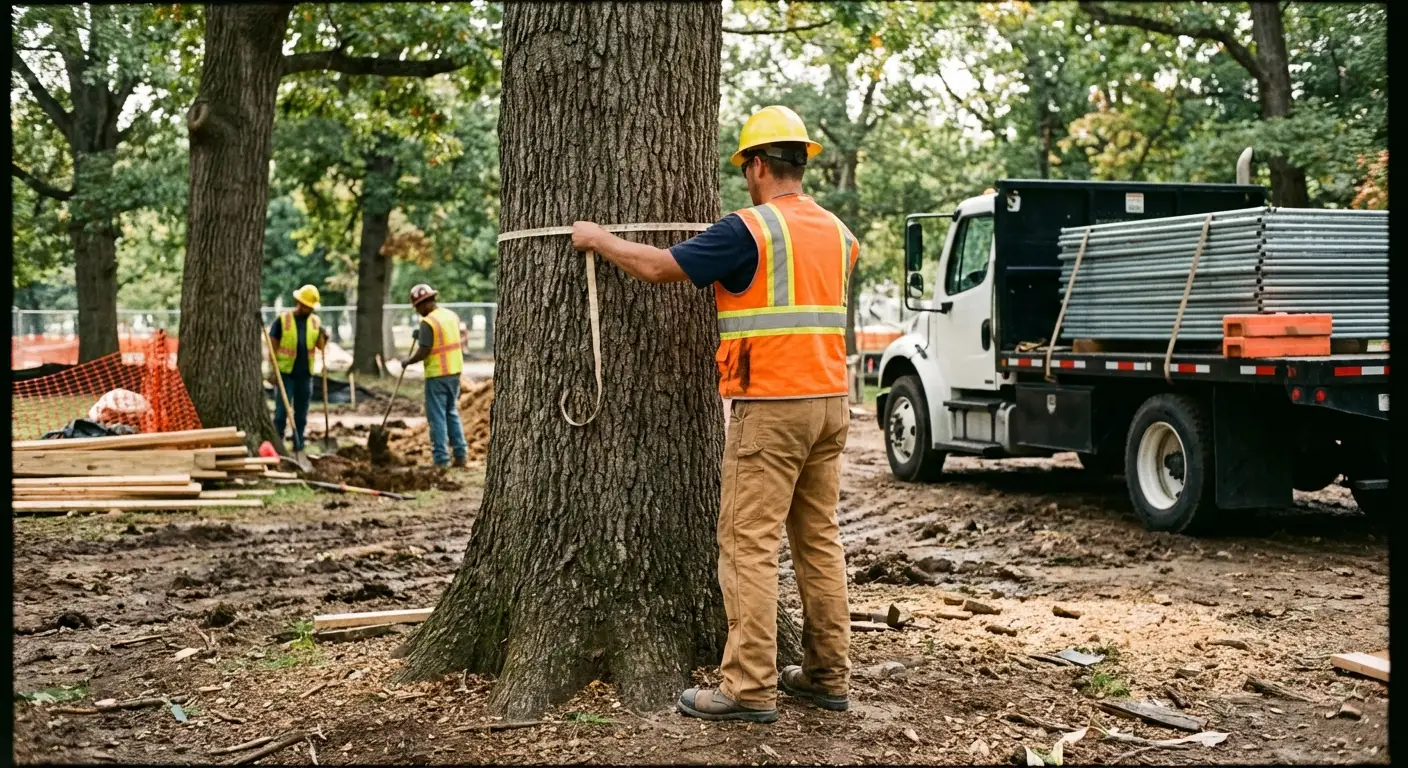
Root Zone Calculation for TPZ Fencing Compliance
TPZ fencing in Lynwood, CA uses trunk diameter, site conditions, and access control to protect roots and meet compliance.
| Root radius method | Measure TPZ fencing from the tree trunk at 1 foot of radius per 1 inch of trunk diameter at breast height; $150-$300 |
|---|---|
| Minimum TPZ enclosure | Set fencing to fully enclose the calculated root zone with rigid panels and secure bases; $18-$30 per linear foot |
| Protected area adjustment | Expand the fence line for pre-1920 wood-frame sites and visible root flare exposure common near Lynwood High School corridors; $220-$480 |
| Access and inspection gap | Leave controlled access points for arborist review, soil checks, and utility coordination; $90-$180 per opening |
| Compliance documentation | Record tree measurements, fence layout, and install notes for OSHA, EPA, and local review; $75-$160 |
| Weather and drainage allowance | Use low-flood-zone drainage clearance and stable footing suitable for Lynwood's 5.6-inch annual precipitation; $12-$20 per linear foot |
| Signage Interval | Every 30 linear feet |
Root Zone Calculation for TPZ Fencing: Lynwood Project Compliance
Precise measurements ensure safety and regulatory adherence for construction perimeter protection.
Common Mistakes in Root Zone Calculation for TPZ Fencing
Root zone calculations for TPZ fencing in Lynwood demand precision to meet compliance and protect tree health. Avoid these typical errors that can lead to costly rework or permit issues.
Ignoring soil compaction effects around root zones
Compacted soil restricts root growth and water absorption, causing tree stress or death despite fencing efforts to protect the TPZ.
Assess soil conditions before installing fencing and avoid heavy equipment near the root zone to minimize compaction.
Misjudging the radius of the tree protection zone
Underestimating the proper radius can expose critical roots to damage, violating local codes in areas like Lynwood Park and St. Francis Medical District.
Measure diameter at breast height (DBH) accurately and apply correct multipliers per regulatory guidelines for TPZ fencing.
Failing to consider existing site conditions in Abbott neighborhood
Neglecting factors like pre-1920 wood-frame building remnants or flood zone risks may lead to improper fencing placement and root damage.
Survey site conditions thoroughly to adjust the TPZ fencing layout accordingly, incorporating local environmental factors.
Using temporary fencing equipment unsuited for TPZ protection
Inappropriate fencing may collapse or shift during windy conditions common near the Los Angeles River Bike Path, compromising root protection.
Choose sturdy fencing options with features like wind load resistance and interlocking hooks for secure TPZ barriers.
Overlooking compliance with Lynwood’s low annual precipitation impact
Failing to factor in water stress can weaken trees, making root zones more vulnerable despite fencing, risking project delays.
Incorporate irrigation or moisture monitoring plans alongside fencing to maintain root health during dry spells.
Root Zone Calculation for TPZ Fencing: Compliance Guide
When things need to be secured, fast and right, that’s on us. We treat every temporary protection zone in Lynwood as if it’s guarding something irreplaceable—because often, it is. From the institutional grounds near Firebaugh High School to the bustling sidewalks of the Plaza Mexico District, our calculations honor both regulatory standards and the lived reality of the neighborhood. Precision isn’t optional; it’s how we’ve operated since 2005.
-
Measure Twice, Anchor Once
Root zone calculations begin with precise field verification—not assumptions. We cross-check soil type, slope, and nearby utilities before determining embedment depth or base size. This prevents over-engineering and ensures compliance with local tree protection standards in Lynwood’s older districts like Abbott.In PracticeAt a site near Firebaugh High School, we adjusted base specs after discovering compacted clay just below surface grade.
-
Match Base to Environment
Lynwood’s low annual rainfall (5.6 inches) reduces erosion risk, but we still select base systems based on micro-zone conditions. In the Plaza Mexico District’s high-foot-traffic corridors, we lean on concrete-steel bases for immobility and zero-trip safety.In PracticeSteel bases kept panels stable during a weekend festival near Civic Center District despite constant pedestrian shuffling.
-
Respect Legacy Landscapes
Many Lynwood sites—especially in Abbott—retain wood-frame structures or mature root systems from the city’s agricultural past. Our root zone buffers comply with tree protection ordinances by maintaining minimum clearance from trunks and drip lines.In PracticeWe rerouted a TPZ layout in Abbott to avoid disturbing a heritage citrus tree’s root spread.
-
Wind Load Dictates Layout
Even in low-flood zones, wind matters. We integrate wind-load resistance into every TPZ design by spacing posts based on panel exposure and anchoring method. This aligns with OSHA 30-Hour safety protocols for temporary structures.In PracticeDuring a sudden Santa Ana gust event, our interlocked panels in the Plaza Mexico District held without shifting.
Century Fence Rentals ensures every TPZ installation in Lynwood meets AFA and OSHA standards through field-verified root zone planning, adaptive base selection, and respect for historic land use patterns.
TPZ Fencing Compliance in Lynwood Neighborhoods
Addressing common root zone questions for temporary protective zone fencing in Lynwood's distinct areas.
What is the minimum root zone distance for TPZ fencing near Lynwood High School?
The root zone distance varies by tree species. Near Lynwood High School, mature oaks require a 15-foot radius. Check local arborist reports for specifics.
How does the Civic Center District's clay soil affect root zone calculations?
Clay soil in the Civic Center District compacts easily, reducing root spread. Adjust calculations by 10% to account for restricted growth patterns.
Are there exemptions for pre-1920 buildings in the Abbott neighborhood?
Pre-1920 wood-frame structures in Abbott may qualify for reduced root zones. Submit historical documentation to Lynwood's planning department for review.
What fencing materials are approved for TPZ areas in St. Francis Medical District?
Chain-link or post-and-rail fences are preferred in St. Francis Medical District. Avoid concrete footings that damage shallow roots near Imperial Highway.
How does Lynwood's low flood risk impact TPZ fence installation?
Low flood zones allow standard installation methods. No special anchoring is required, but maintain 6-inch clearance above grade for drainage.
Who verifies TPZ compliance for fences near protected trees in Lynwood?
Lynwood's urban forestry division inspects TPZ fencing. They coordinate with Century Fence Rentals for site-specific requirements before approval.
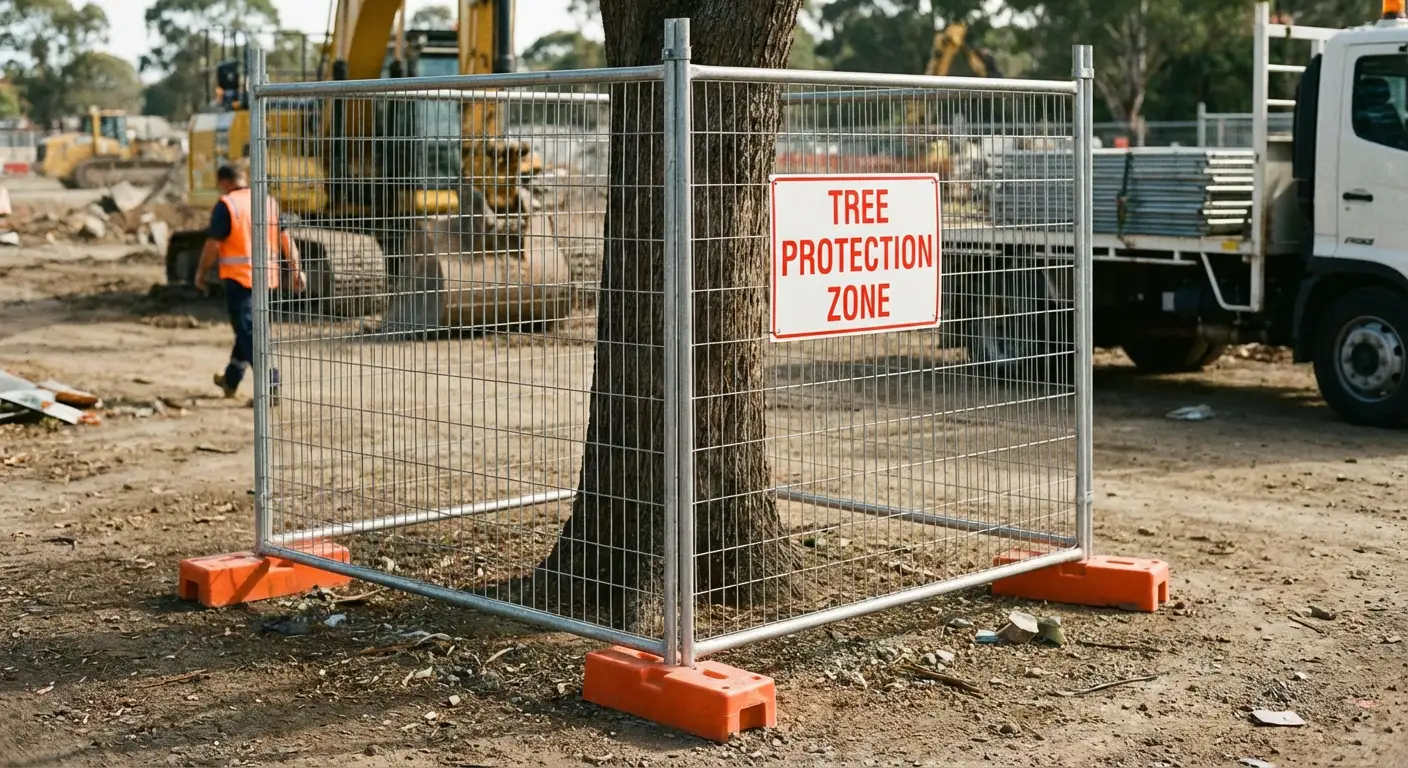
Accurate Root Zone Calculation for TPZ Fencing Compliance
Ensure TPZ fencing installations meet local Lynwood regulations with precise root zone calculations following OSHA and EPA guidelines.
Trusted by Lynwood contractors for regulatory compliance expertise